MUSLIM CONTRIBUTION TO SCIENCE AND CIVILIZATION
Science is the shared knowledge of mankind and the history of scientific discovery has gone through various phases of development. George Sarton, in his History of Science, consisting of five volumes, divides the history of science in to ages; each age lasting half a century associated with one central figure, from 450 to 500 B.C is designated as age of Plato, followed by half centuries of Aristotle, Euclid, Archimedes and so on. From 600 to 700 AD was known as the Chemist Centenary. From 750 to 1100 AD, for three hundred and fifty years continuously unbroken in succession we find the names of Jabir bin Hayyan, Al Khwarizmi, Al Razi, Abul Wafa, Al Beruni, Ibn Sina, Ibnul Haitham, Umar Khayyam and many other Muslim scientists who had made immense contribution to the development of many branches of science. It is interesting to observe that only after 1100 AD in this volume of History of Science appears the first Western names such as Gerard of Cremona, Roger Bacon and others. But still we find the domination of Islamic science because for another 200 years we find the names of Muslim scientists such as Nasirud Din Al Tusi and Ibnul Faris being mentioned.
Islam appeared on the stage of human history during the 6th century not only as the final revelation of Allah to mankind but also as a great intellectual movement and a civilizing force that were to exert a dynamic influence on the course of human history and civilization.
Tawhid or the Unity and Oneness of God is the fundamental doctrine of Islam and Islam views every aspect of creation and human life as a unity. Muslims inspired by this vision of Tawhid viewed this universe as a cosmos, subjected to immutable, unfaltering laws regulated by a great design and plan by the most supreme intelligent being – the Creator and Sustainer of this universe – Almighty Allah. Hence, the Quranic vision prompted the Muslims to view the whole universe as the manifestation of the Ayat or the great signs of God. They began to study the Ayats in the heavens and the earth in the light of the Ayat – Verses of the Quran. They considered as a religious duty to discover the laws that governs the working of the universe and set out on the voyage of the great discovery of laws of nature and this intellectual odyssey is the history of Muslim science. The Muslims set out in this intellectual journey when Europe was destroying all the intellectual legacies of the ancients in the name of religion. The manuscripts of Greek and Roman learning were publicly burnt by the priests and even the library of Alexandria was destroyed.
The subject of Muslim contribution to science is so vast that even George Sarton, a great authority on history of science says as follows:
“The study of Arabic science is so heterogeneous and so wide that a man of great zeal, at least devoting all his time and energy to it could not investigate deeply the whole of it. He would have to choose embracing the whole field or extracting more thoroughly a small part of it.”
- Sarton, Islamic Science in Near Eastern Culture & Society, (Ed. T. Gular Young), New Jersy, 1951, p.84
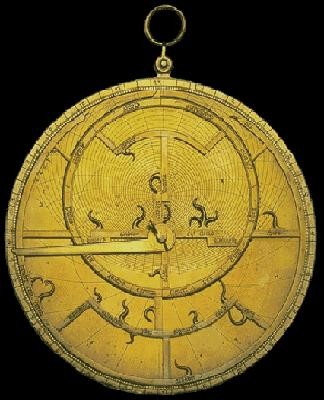
Astronomy and Mathematics were the first of the sciences that engaged the attention of the early Muslims. The Arabs developed a keen interest in the study of the heavens for reasons nostalgic and pragmatic. To nomadic tribes in the desert the pattern of the stars was very familiar and the practical task of travelling in the dessert compelled the study of the relative positions of the heavenly bodies. A further impetus to the study of astronomy was imparted by Islam. All Muslims pray in the direction of Makkah and this direction from different parts of the globe had to be ascertained, the precise times of five daily prayers had to be determined and this time itself varied as it is based on the apparent motion of the Sun and the commencement of the Fast and its termination are based on the visibility of the moon and specific times of each days fasting itself is to be determined, so for more reasons than one Muslims pursued the study of Astronomy.
During the Abbasid period Indian and Greek works on astronomy were translated into Arabic and Muslims enriched this legacy by their own contributions. Abbasid Caliph Mamoon erected at Baghdad an astronomical observatory. It was the first well equipped observatory in the history of astronomy. From now onwards Muslim astronomers began to systemically observed the celestial movements and verified with remarkable exactitude all the calendars and astronomical tables of the ancients. Caliph Mamoon established another observatory at mount Qassiuon outside Damascus. Muslim astronomers tried to arrive at two main things – to determine the size of the earth and to know its circumference. The underlying assumption of these endeavours was that the earth was round. The notion of the spherity of the earth was held by the Muslims in the 9th century at a time in which medieval Europe clung to the theory of a flat earth until the 15th century. The history bears testimony to the fact how Bruno was burn to death by the inquisition for upholding the Copernicus theory of earth.
Al Battani and Omar Khayyam are great names in Muslim astronomy and Al Battani who is known for his astronomical tables is listed among the twenty most important astronomers of the world. Abu Yunus was the inventor of the Pendulum and the Sun Dial. Al Farghani’s book ‘Elements of Astronomy’ was translated from Arabic into Latin in the 12th century and gained prominence in the West. Many of the names of stars such as Acrib, Altair, Pherked are of Arab origin and technical terms such as Nadir and Zenith are of Arab origin.
Mathematics is the language of science. From ancient times mathematics had gone hand in hand with astronomy and astronomical observations became accurate with the application of mathematics.
Al Kwarizmi, Thabit bin Qurrah, Al Battani, Ibnu Sinan, Omer Khayyam and Nasiruddin Tusi are few popular names of a legion of mathematicians who adorn the intellectual heritage of Islam. Of these mathematicians Musa Al Kwarizmi occupies a significant place. According to Professor Hitty, Al Kwarizmi was one of the best scientific minds of Islam who exercised a great influence on mathematical thoughts during the Middle Ages. He produced many illuminating treatises on the subject of mathematics and it was through his works that Europe became familiar with Arab numerals. About 825 AD, Al Kwarizmi published a thought provoking treaties on numerals known as Al Jabar Wal Muqabala which in its Latin version was known as Algorithm De Numero Indorum. The word Algebra was derived from the word Al Jabar, the title of the book written by Al Kwarizmi. In fact the Latin word Ciphra and the modern English or French form of it as Cypher and Cyfre respectively came from the Arabic word Safr meaning empty or nil.
Physics was another important science that engaged the attention of Muslims. Most Greek sciences including physics remained speculative and there was no attempt made for experimentation, observation and verification. Nearly 900 years ago, Muslim scientist studied the fundamental questions of physics such as force, motion, light, heat, vacuum, specific gravity and the main principles of mechanics and hydrostatics. Among the Muslim scientists Al Kindi, Ibnu Sina and Al Beruni made valuable contributions in the field of physics.
But among the Muslim scientists the image of Ibn Al Haitham known in Europe as Al Hazen looms, larger and clear. He made a great contribution in the field of optics – an important branch of physics – and until time of Ibn Al Haitham in optics the views of Greeks such as Euclid and Ptolemy held sway. The mechanics of seeing, it was believed, was a consequence of rays emanating from the eye and impinging on the object seeing. This explanation though far from truth, appears plausible on supervision observation, but this position was challenged by Ibn Al Haitham contrary to the views of Euclid and Ptolemy. He pointed out that in the process of vision the light travels from the object to the eye. He also analyzed the role of the eye and tried to disclose the mystery of how one sees by combining his knowledge of physics and physiology. He introduced to science something remarkable – the lens -. It is recorded that he even made a lathe in which he made curved lenses and mirrors for his own experiments. His experimental researchers in magnifying lenses inspired Roger Bacon and Kepler leading to microscopes of Leevanhock and telescope of Lippershe in the 17th century. According to Giovanni Della Porta Ibn Al Haitham was the first to explain the apparent increase in the size of heavenly bodies. By his acute understanding of the atmospheric refraction he was able to say that the light of the sun reaches us even when the sun is as much as 19 degrees below the horizon. He also observed the semi circle shape of sun’s image during the eclipses on the wall opposite a small aperture. This is the first known mention of the optical phenomenon of Camera Obscura, a dark chamber on which all photography depends. He knew correctly the relationship between velocities, spaces and laws related to falling bodies. However, it was left to Galileo nearly 500 years hence to pursue his observational and thought experiments to greater heights. Ibn Al Haitham also fully understood the precepts gravitation and recognized gravity as a force, yet its mathematical formulation had to await the genius of Isaac Newton. His writings on physics and his treaties on optics known as Kitabul Manazir, were translated into Latin in 1270 AD and some of the manuscripts relating to his scientific investigations are still preserved in the Bodliver library at Oxford and Roger Bacon refers to him almost in every steps of his book Opus Magnus on the section dealing with optics.
Chemistry is another branch of science in which Muslims excelled. Arabs inherited alchemical knowledge from the ancient Greeks, but it was the Muslims by extending the mathematical mode of thought made observable chemical phenomena a measurable quantity and subjected their chemical investigation to the scientific criteria of experimentation, observation and verification. Like the word algebra the word chemistry itself is of Arab origin. Will Durant in his survey of civilization carefully records as follows:
“Chemistry as a science was almost created by the Muslims, for in this field when the Greeks were confined to wage hypothesis, the Saracens introduced precise observations, controlled experiments and careful records”
Jabir ibn Hayyan was one of the prominent figures in the field of chemistry. If a grateful posterity honours Hippocrates as the father of medicine and Herodotus as father of history then it is appropriately edifying on our part to acknowledge Jabir bin Hayyan as the father of chemistry. He gave a scientific description of the two principle operations in chemistry, one of them is calcination which is employed in the extractions of mettles from their ores and the other is redaction which is employed in numerous chemical treatments. Jabir believed that there is order and proportion in the material world and it is regulated by definite laws and values, proportions and conditions hence he felt that knowledge of their laws would enable one to bring about changes in composition of substance. The qualitative change in substance therefore could be quantitatively explained. Thus, he was led to the Concept of Balance which he elaborated in his Kitabul Mizan – Book of Balance – his writings are prolific and medieval Christian Europe refer to this immense body of knowledge as Jabrian Corpus.
In the field of medicine, Muslims made immense contribution and many exhaustive studies of encyclopaedic nature was produced by Muslim scientists in medical science. Al Razi known to the Latin West as Rhazes was the greatest physician of the Arab world among the two hundred works he compiled he wrote half on medicine. In the school of medicine at the university of Paris hangs portraits of ten physicians of great distinction, one of them is Al Razi. His Kitabul Hawi in twenty volumes comprehensively covered every branch of medicine. According to Will Durant, it was one of the nine books that composed the entire library of medical faculty of Paris in 1935 and from the 12th to 17th centuries the book held sway in the Western world. Another book by him known as Kitabul Mansoori is a survey of ten volumes and it was rendered into Latin after two centuries. One can judge its scientific merit when it is borne in mind the between 1498 and 1866 it went through forty English editions. The most celebrated of all the works of Al Razi is on Smallpox and Measles which gave the first clinical account of the two diseases.
Ali ibn Hussain ibn Sina known as Avicenna is another towering personality in the field of Islamic medicine. His influence on European medicine has been overwhelming. His Qanun Fi al Tib or Canon of Medicine is a gigantic survey of physiology, therapy and pharmacology. He considered medicine as the art of removing an impediment to the normal functioning nature of the body. His book was translated in to Latin by Gerard of Cremona in the 12th century. Last thirty of the 15th century it was edited 16 times – 15 editions in Latin 01 in Hebrew – . Some other 15 works of Avicenna known as Grammar of Avicenna was the chief text in European medical school during the medieval period. Ibn Sina’s Qanun deals with diseases and their classifications, description and causes along with the description of the simple and compound medicine. Ibn Sina also noted the fact that pulmonary tuberculosis was contagious and he thought it spread through soil and water. He was very much interested the question of the effect of the psyche on the body and wrote a great deal on psychological diseases.
Muslims made great contribution to surgery. Abul Qasim Al Zahrawi known in the West as Albucasis is regarded as the famous of the Arab surgeons. He wrote the famous book on surgery known as Al Tasrif which also includes sections on preparations of drugs, nutrition, public health and anatomical dissections. The sections on surgery are illustrated with drawings of about one hundred surgical instruments. There is a description of techniques for operating to relieve various conditions including the amputation of limbs and the crushing of bladder stones. He invented many instruments and particularly devised a pair of forceps for midwifery. His book became famous in the universities of Europe in the middle ages and was translated into Latin by Gerard of Cremona in 1187. It was the chief reference work for surgery in the universities of Italy and France during the middle ages.
Ibn Rushd was another noted figure in the field of medicine. He wrote a medical work called Al Kulliyyat which was known in Latin as Colliget. Among his original contribution was the observation that smallpox can infect only once. Ibn al Nafees another great physician of eminence describe the lesser or pulmonary circulation of blood for the first time in history. This single achievement of Ibn al Nafees was ignored for centuries and wrongly attributed to Michel Servites and William Harvey.
It is pertinent to quote Bertrand Russell, the eminent philosopher in relation to the term Dark Ages which completely ignored the brilliant contributions made by Muslims to civilization at a time when Europe was virtually steeped in darkness:
“Our use of the phrase Dark Ages to cover the period from 699 to 1000 AD marks our undue concentration on Western Europe. During this period from India to Spain the brilliant civilization of Islam flourished. What was lost to Christendom at this time was not lost to civilization but quite the contrary. To us it seems that Western European civilization is civilization. But this is a narrow view”
(Bertrand Russell, History of Western Philosophy, London, 1948, p.419)
REFERENCES:
- O’ Learvy, De Lacy, How Greek Science Passed to the Arabs. London, 1949
- Nasr, Seyyed Hussain, Science and Civilization in Islam, Lahore, 1968
- Shustery, A, Outline of Islamic Culture, Bangalore, 1938
- Ulman, Manfred, Islamic Medicine, Edinburgh, 1978